Liberty Shared is a member of GAATW based in Hong Kong. Jennifer Janssen and Borislav Gerasimov from the GAATW Secretariat conducted this interview with Duncan Jepson, Founder and Managing Director of Liberty Shared, in June 2022, to better understand the organisation’s history, current work, and context.
Borislav Gerasimov: Tell us about yourself and Liberty Shared. When was the organisation founded and why?
Duncan Jepson: I was working as a lawyer in finance for about 15-16 years. Prior to that, I worked on supply chains in China. I was a filmmaker for a long time, did documentaries and feature films, and I've been a writer throughout that. Then Liberty Shared was established. I wanted to work on the issue of abuse of vulnerability primarily. I started out by working on social mobility and wildlife trafficking issues in Hong Kong. That led me to think about vulnerability of populations in developing countries that have very limited local charitable support, and then I made a film in Nepal about two young people, one of whom had been trafficked, and the other homeless, and how they had chosen to build a life together in one of the poorest countries. I made that film and then I decided to help more. I became much more aware of the issue of abuse of vulnerability particularly through sexual labour, and forced labour. I thought we needed to work systemically to change the system that allows people to be vulnerable and then abused.
I was serving on the board of a charity in Nepal and one of its sources of funding suddenly dried up. We had to quickly do something to raise money. Underneath our building, there was a freshwater aquifer. And there was a proposal to drill, drain the aquifer, and then sell bottled water. It went to the board, and I thought about it and I said no, I'm sorry, this thing has been here for thousands of years, I think we should just leave it and we'll figure out another way to do this but we will have to stop some services. I felt so strongly that we were not going to exhaust every single resource that there is just to keep going. That made me think that there's got to be a systemic way of approaching things. Running about trying to absorb every single resource to help each individual person is not changing the structure of the problem. For some people, and obviously I was doing this at the time, providing aid and care is vitally important, but you're not going to absorb all the resources of the planet, which just doesn't make sense. So I thought we have to find more sustainable ways and so that's how Liberty Shared was born.
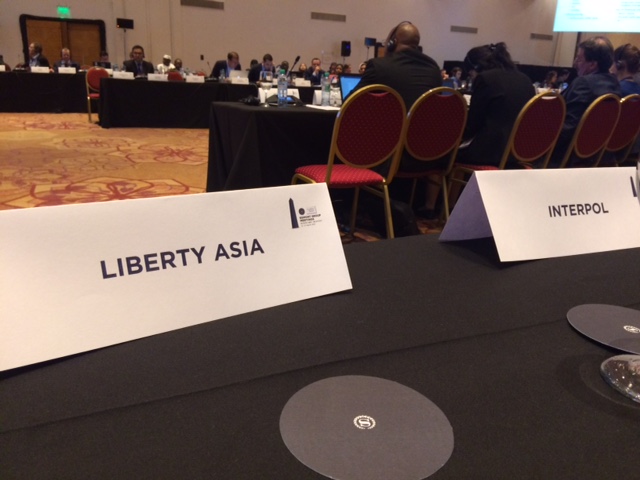 |
In April 2017, Steve Farrer, our director of information and intelligence programs, which focused on using anti-money laundering to disrupt proceeds from human trafficking, was invited to present at the Financial Action Task Force meeting in Moscow and then to attend the Egmont Meeting in 2018 - we finally got a seat at one of the tables and the dialogue about banking and HT started properly at a global level. |
First, frame the problem that helps identify potential action, labour exploitation is fundamentally about people, products, and money. And so the question is then what is it that you can do to address any of those three things. You can provide care to the workers, but that wasn't what we were going to do. What we can do is make sure that we communicate workers’ experiences and try to hold employers and managers and corporations, accountable. You can do something on products like stop the products from being sold. In our case, we did things like a trade ban and so forth. For the money, this is where I started because that was my background in finance. Could we disrupt the flow of money using the anti-money laundering framework? That was another thing we started.
We started to identify where we could make a difference long-term, over maybe five, seven years, and then pursue that. In relation to sexual exploitation, the question was: what can we really do? There is the care aspect of it, which we're not going to do. So one thing that we must do is be able to gather lived experiences of victims and make sure that those can be used to improve services, to improve funding - certainly structural change - but also to improve arrests and other interventions. That’s why we created the Victim Case Management System (VCMS). This was fundamental because without information and records no life will be improved, and no justice will be served. VCMS helped with labour trafficking victims as well.
Another thing was, if you're going to do all this, you need to have the attention and interest of the larger NGO community and you want to see them working together. So we created Freedom Collaborative and now you could see the strands of what we were doing come together. Ultimately, you want to see all the things you built thrive and become not just their own programme, but their own entity.
Jennifer Janssen: What is unique about Liberty Shared’s work and approach?
DJ: We work on systems rather than individuals and not many NGOs do that. We’ve taken a long-term view. Most NGOs are, unfortunately, bound by the funding cycles that they commit to. We obviously have those too, but we managed to organise them in a way that didn't prevent us from wavering from our long-term strategy.
I was talking with a donor consultant and I showed her the strategy that I had created in 2015 and then showed her the 2021 version and I was glad to see that the strategic thinking worked. We stuck to the same strategy and I think in some places it's proved to be successful, in other places it could have been better, and in some it didn't work at all. But I think we had more successes than failures and that was very important. Those things don't necessarily make us unique, but they perhaps make us a bit of an outlier.
We are very passionate about learning through failure and we were not bothered about talking about failure. I'm keen on a fast fail approach; we learn from it and move on.
BG: Do you focus on specific world regions?
DJ: Because we are working on the system we aren't necessarily bounded by geography, but just by our resources and reach. If you take the issue of labour abuse (if you think of it as a framework of people, products, and money) and you were to work globally with workers that would be very difficult because you’d need a huge team to engage with workers. If you want to work on products, that's slightly different. You could look at markets, which is what we’ve done, you could look at distribution channels. Money is a bit easier because it does work globally and so that's where we started because the money aspect had a global presence. And if you could change the tune of banks and financial institutions, which is where we started in 2012, then you can have a global impact without having to go build global locations.
The second thing then was products. We could look at products and say well, let's look at tobacco in Malawi, or palm oil in Malaysia, or fishing. But the truth is you're going to have to pick your product and see what you can do. So from the very beginning, I picked palm oil because it was two countries, two jurisdictions, two markets, a known set of large buyers, and a known set of suppliers. The basic way you look at it is as a complex adaptive system and you map out the stakeholders within that system. Bearing in mind that the system will always adapt and behaviours will emerge. You can never know everything. So you have to think which of the stakeholders that you've identified have a serious influence on the shape of the system. And if they can influenced to change the way the system is shaped, then it might have some effect, and obviously what I'm trying to do is reshape the system in favour of vulnerable people.
Then in terms of geography, it's a question of where you think you can have the most impact. You could work on Malaysian palm oil that has impact in the US, in Europe, and obviously in Malaysia. But you will have impact in Indonesia because they will say well, the goods are banned in the US coming in from Malaysia so we should take that opportunity. Your geographic focus then can vary at different levels, it can be global, but sometimes it can be purely local. For example, I'm based in DC because the reality for me was that I wanted us to remain a small NGO to be impactful, get scale on resources, and so when you think of where you will have the most impact for your resources, the US still has the largest economy, it has the currency of trade, and it is one of two superpowers. Here you can have a global impact. And you want to have global impact because that's the most you'll get for your money and resources.
|
|
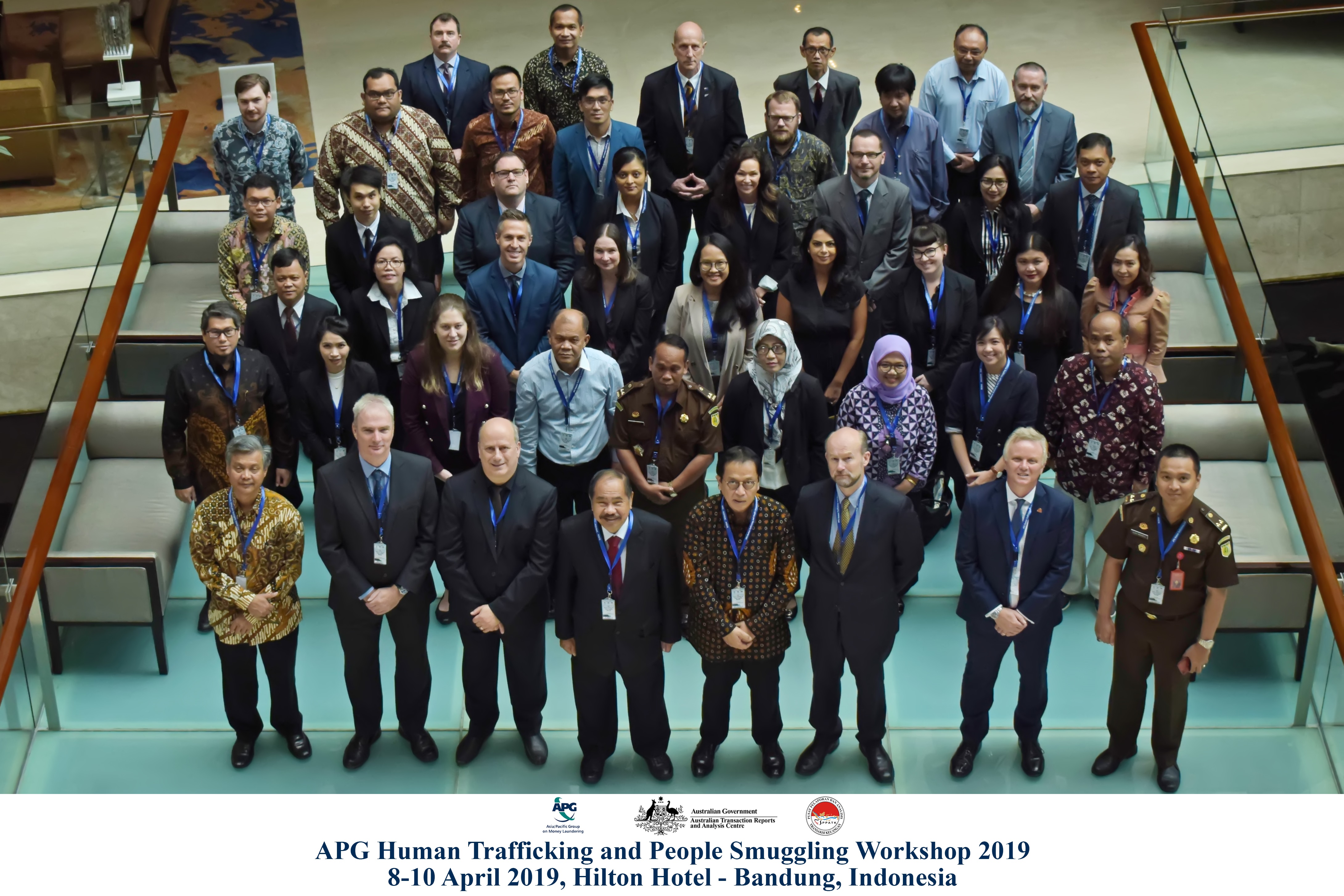
In 2019, the new director of the anti-money laundering program, Val Farabee, worked with the Asia Pacific Group, a part of the Financial Action Task Force, to create a training workshop for national money laundering intelligence units using the wide range of typologies she had developed. |
JJ: What are some successes that you're most proud of?
DJ: One thing that’s made me proud is the Freedom Collaborative. When I look at it, it’s a community people use, it’s a good thing, it helps the community help itself. It’s a way for people to work together and learn together. My last initiative for Freedom Collaborative, before it spun out of Liberty Shared, was to create the Advisory Community, giving the platform an intergenerational focus.
I'm also proud of the work we did on anti-money laundering, which I started ten years ago. The Financial Action Task Force are the global body that provides guidance and direction on money laundering and our aim was to have some sort of voice with them. We are nobody’s in the grand scheme of things but in 2015 we get invited to one of their meetings to present on money laundering and human trafficking, and eventually we helped them provide training, and we contributed to one of their typology documents. We did have global impact in the way that banks look at human trafficking now and I’m very proud of that.
I’m also proud of how we applied victims’ lived experiences; we made gathering information from the ground central to what we do and making sure that information was not lost or hidden but was communicated to people. And we’ve done that very well. Whether through VCMS or through the work we did on corporate accountability, and money laundering. I think that's something that is central to what we do: listening to victims and vulnerable people, and then taking what is relevant and important and providing that information to people who then act on it. Two weeks ago we signed an memorandum of understanding (MOU) with the Department of Homeland Security's Center for Countering Human Trafficking and Forced Labor to support the investigation of forced labor cases. I am most proud of our work to support the opening of some of the first potential criminal investigations of corporations involved with and benefiting from forced labor. It is a bit of history!
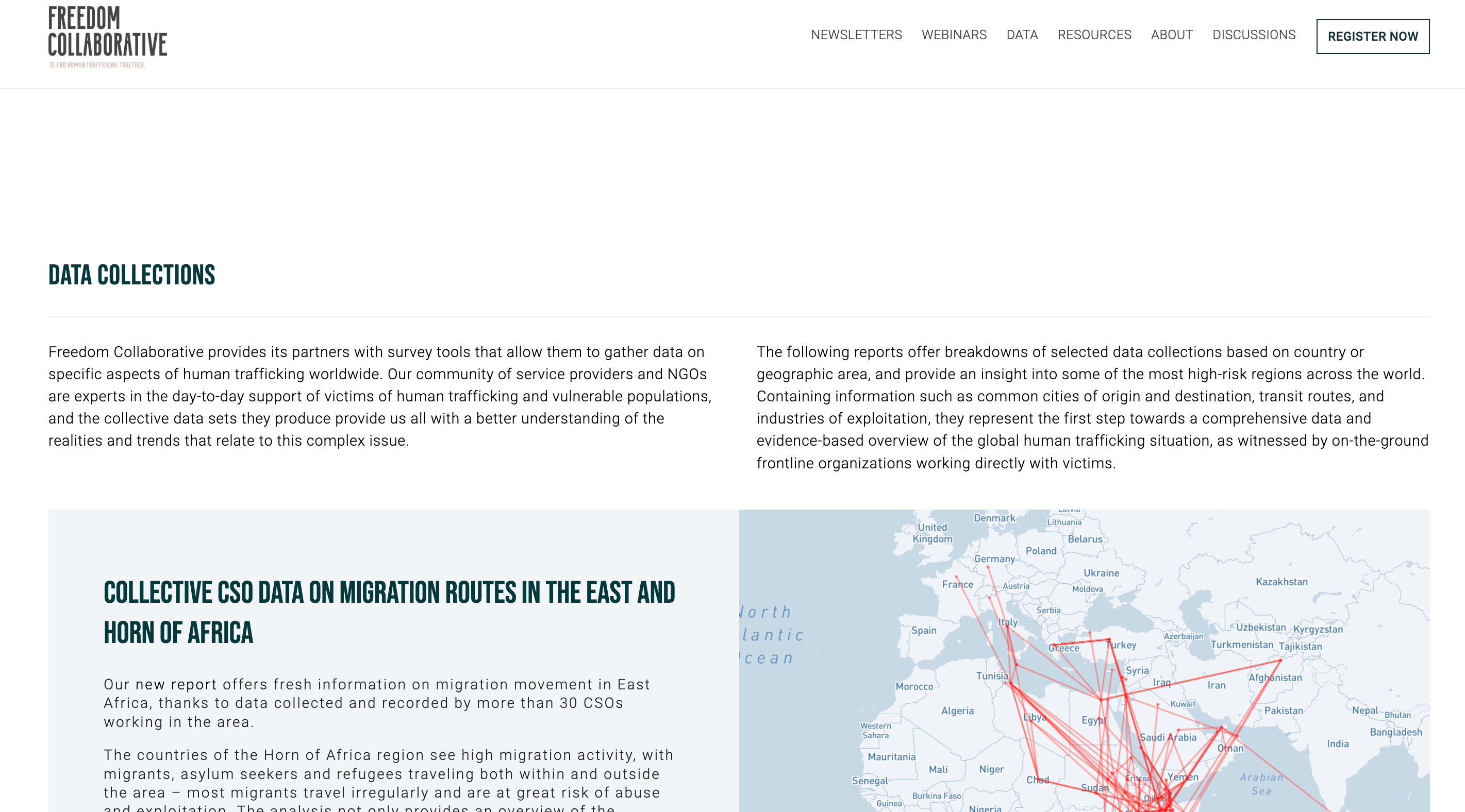 |
In 2015 we were still testing the newsfeed on Freedom Collaborative and by 2022 the design had changed completely and FC became a significant contributor to trafficking data collection, with a membership of over 5000 professionals. |
BG: I want to go back to something you mentioned earlier, about banning products, for example, from entering the US. There are concerns that such actions might just lead to the closure of businesses and the layoff of workers. In your experience, what is the impact on workers and employers? Has it led to improved working conditions?
DJ: In the cases we've worked on, yes.
If you're looking at a company and using this mechanism to ban their products from the US, you are having an impact on at least a couple of things. First, if U.S. CBP act and the companies goods are banned from entering the U.S. then it may reduce their revenue stream; it might not be significant, but it might be hugely significant. Second, by reducing their revenue stream, and essentially banning them from a market in the future, their investors may become very concerned - why should they keep investing in a company if potentially the company has no future in one of the world’s largest markets? The first thing to remember is, it is not wise to go and look at a business that is small, or even medium size, because if their market is reliant on the U.S. then this could severely damage their solvency. Worse still that could push the company into receivership because they no longer have the liquidity to service their cash requirements. This can still happen to a large company, but large companies can find alternative sales opportunities or raise short-term liquidity. The idea that we're going to come up with an action or a set of activities that is just going to be resolute, without mitigation, is not possible. If you think about palm oil, the Malaysian industry, like any businesses want to sell it into the U.S. or European markets, but in reality they do sell the bulk of it to India and China already. What happened and what's interesting - and this is the point - is that you can never know what actions and reactions will emerge. Indonesia suddenly decided for about a couple of months to stop exports and suddenly there are all these US clients that want palm oil. Malaysia can't sell to them, at least two of the largest businesses in Malaysia can’t sell to them. And it's that kind of sudden restriction on opportunity that makes the investment community, and the suppliers look hard at the situation. You can't plan for any of that, you can't strategize, it's just how a complex adaptive system behaves.
One is not trying to ruin the company because you want the jobs to exist, but you want the jobs to be better. You want workers to be treated better and the company will have to invest money in these improvements. What you want to do is highlight to a company that this is of commercial importance, that how they treat workers is not just a human rights argument, it is a commercial argument. You're trying to show them that they have to incorporate this issue into the economics and value proposition of their industry. And that's what we try to do.
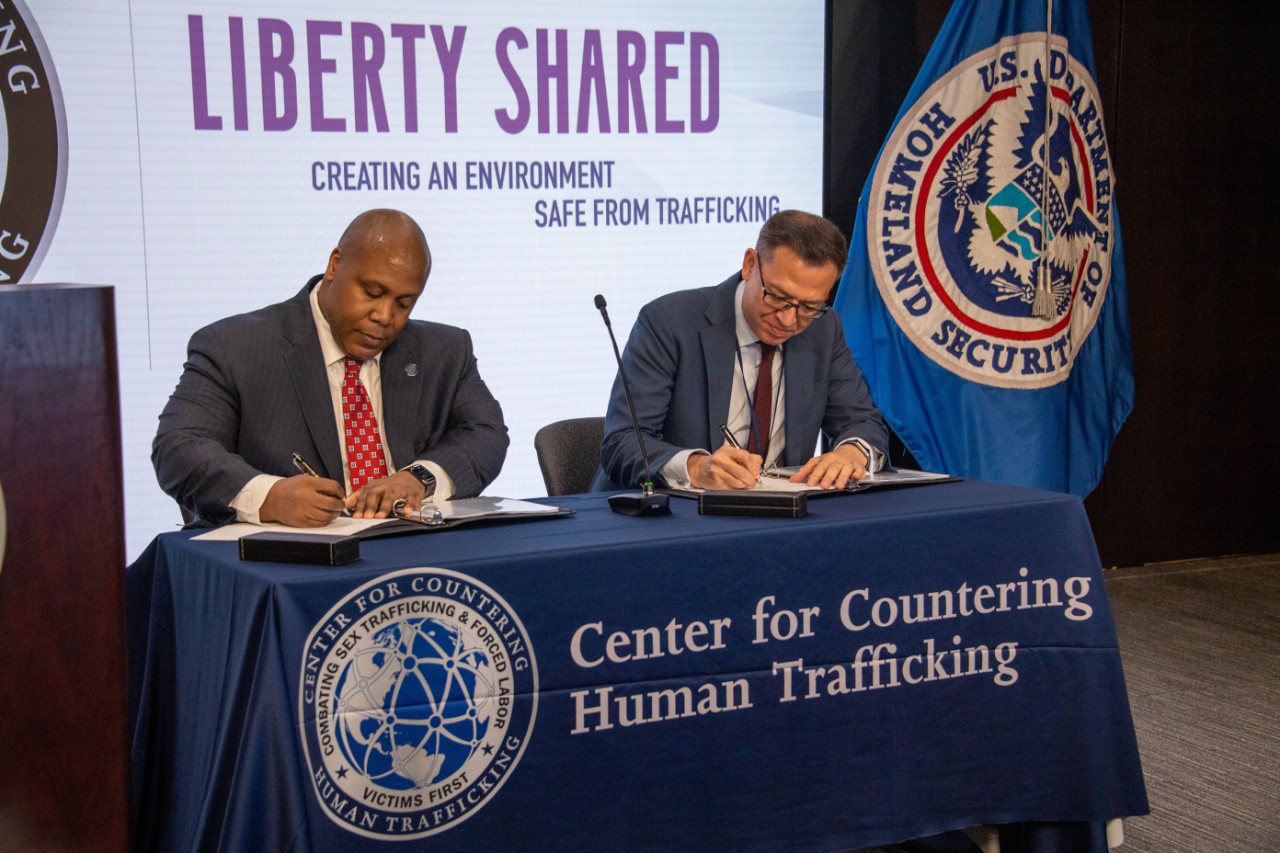 |
In July 2022, Director Cardell T. Morant of the Center of Countering Human Trafficking and I signed the MOU to support the first criminal investigations of global corporations using forced labor in their supply chains. Finally there are ongoing investigations putting pressure on corporations to eliminate forced labor! |
Our ultimate goal is about accountability. We work closely with U.S. federal law enforcement and have a relationship, through the MOU, with them because we want them to open cases and we want them to hold individual businesses accountable in a criminal justice sense. The trade ban is a useful tool for making this become an economic and commercial problem, not simply a human rights issue. For the people in our community, it's important to realise there are only a small number of mechanisms you can use; corporate accountability is very nascent and it doesn't happen very much.
JJ: You spoke earlier about learning from your failures, which is very important. Is there a failure you would like to share?
DJ: We started working on a global hotline a few years ago and that didn’t work. We then had an idea to implement a hotline network rather than a hotline, but we just couldn't get the interest of funders. We should have done more work on the investor side of things, that work needs completing. With VCMS, it is a difficult balance between technology and its implementation, and the social behaviour side of things - it's easy to become wrapped in the technology. Looking back, we should have had a better balance of those things - technology is a tool, not a solution in and of itself.
There is also information and data that we could have gotten more out of if we did things quicker, if I'd moved to DC sooner. There are relationships that we should have worked on more, and there are relationships that we should have terminated earlier. There is definitely a list and we are working on publishing these in a new website we will launch in November.
JJ and BG: Thank you so much for your time.
Conoce Nuestras Organizaciones Miembros: Liberty Shared
Liberty Shared es una organización miembro de GAATW en Hong Kong. En Junio de 2022, Jennifer Janssen y Borislav Gerasimov del secretariado de GAATW realizaron una entrevista con Duncan Jepson, Fundador y Director Gerente de Liberty Shared, para expandir nuestro conocimiento sobre la historia, el trabajo reciente y el contexto de la organización. La entrevista original fue en Inglés, despues traducido al Español por Jennifer Janssen del secretariado de GAATW.
Borislav Gerasimov: Cuéntenos de usted y Liberty Shared. ¿Cuándo fue fundada la organización y cuáles fueron los motivos?
Duncan Jepson: Estuve trabajando de abogado en finanzas por alrededor de 15 a 16 años. Antes que eso, trabajé en cadenas de distribución en China. Fuí cineasta por un largo tiempo, hice documentales y largometrajes, y también fuí escritor a lo largo de esa época. Después Liberty Shared fué establecido. Quería enfocarme en la problemática del abuso y la vulnerabilidad principalmente. Comencé por enfocarme en movilidad social y problemáticas sobre el tráfico de vida silvestre en Hong Kong. Esto me hizo pensar sobre la vulnerabilidad en las poblaciones de los países en desarrollo que a menudo tienen limitado el apoyo caritativo local, y entonces hice una película en Nepal sobre dos personas jóvenes, uno de ellos había sido traficado, y el otro era vagabundo, y de cómo eligieron construir una vida juntos en uno de los países más pobres. Hice esa película y decidí que quería ayudar más. Me volví más consciente del tema de vulnerabilidad particularmente en el contexto de trabajo sexual, y trabajo forzado. Pensé que teníamos que enfocarnos en trabajar sistémicamente para cambiar el sistema que permite a la gente ser vulnerable y también abusados.
Estaba sirviendo en la junta directiva de una organización benéfica en Nepal y una de sus fuentes de financiación se secó repentinamente. Tuvimos que hacer algo rápidamente para recaudar dinero. Debajo de nuestro edificio había un acuífero de agua dulce. Y había una propuesta para perforar, drenar el acuífero y luego vender agua embotellada. La propuesta fue a la junta, lo pensé y dije que no, lo siento, esto ha estado aquí durante miles de años, creo que deberíamos dejarlo y encontraremos otra forma de hacerlo, pero tendremos que parar algunos servicios.
Sentí con tanta fuerza que no íbamos a agotar todos los recursos que hay solo para seguir adelante. Eso me hizo pensar que tiene que haber una forma sistémica de abordar las cosas. Correr tratando de absorber todos los recursos para ayudar a cada persona individual no está cambiando la estructura del problema. Para algunas personas, y obviamente yo estaba haciendo esto en ese momento, brindar ayuda y atención es de vital importancia, pero no vas a absorber todos los recursos del planeta, lo cual simplemente no tiene sentido. Así que pensé que teníamos que encontrar formas más sostenibles y así nació Liberty Shared.
| |
En abril de 2017, Steve Farrer, nuestro director de programas de información e inteligencia, que se enfocó en el uso de la lucha contra el lavado de dinero para interrumpir las ganancias del tráfico de personas, fue invitado a presentar en la reunión del Grupo de Acción Financiera Internacional en Moscú y luego a asistir a la Reunión de Egmont en 2018, finalmente conseguimos un asiento en una de las mesas y el diálogo sobre banca y HT comenzó correctamente a nivel mundial. |
Primero, enmarcar el problema que ayude a identificar la acción potencial, la explotación laboral es fundamentalmente de personas, productos y dinero. Entonces, la pregunta es qué es lo que uno puede hacer para abordar cualquiera de esas tres cosas. Puedes brindar atención a los trabajadores, pero eso no era lo que íbamos a hacer. Lo que podemos hacer es asegurarnos de comunicar las experiencias de los trabajadores y tratar de responsabilizar a los empleadores, gerentes y corporaciones. Puedes hacer algo con los productos, como detener la venta de los productos. En nuestro caso, hicimos cosas como una prohibición comercial y demás. Por el dinero, aquí es donde comencé porque esa era mi experiencia en finanzas. Podríamos interrumpir el flujo de dinero utilizando el marco contra el lavado de dinero? Esa fue otra cosa que empezamos.
Comenzamos a identificar dónde podíamos marcar una diferencia a largo plazo, quizás durante cinco o siete años, y luego nos enfocamos en eso. En relación a la explotación sexual, la pregunta era: qué podemos hacer realmente? Está el aspecto del cuidado, el cual no vamos a hacer. Entonces, una cosa que debemos hacer es ser capaces de recopilar experiencias vividas por las víctimas y asegurarnos de que puedan usarse para mejorar los servicios, para mejorar la financiación - sin duda un cambio estructural - pero también para mejorar los arrestos y otras intervenciones. Por eso creamos el Sistema de Gestión de Casos de Víctimas (VCMS) por sus siglas en inglés. Esto fue fundamental porque sin información y registros no se mejora la vida y no se hace justicia. VCMS también ayudó con las víctimas del tráfico laboral.
Otra cosa fue que, si vas a hacer todo esto, necesitas tener la atención y el interés de la comunidad de ONG más grande y quieres verlas trabajando juntas. Así que creamos Freedom Collaborative y ahora podías ver cómo se unían los hilos de lo que estábamos haciendo. En última instancia, deseamos ver que todas las cosas que construimos prosperen y se conviertan no solo en su propio programa, sino en su propia entidad.
Jennifer Janssen: Qué tiene de especial el trabajo y el enfoque de Liberty Shared?
DJ: Trabajamos en sistemas en lugar de individuos y no muchas ONG hacen eso. Hemos adoptado una visión a largo plazo. Lamentablemente, la mayoría de las ONG están sujetas a los ciclos de financiación a los que se comprometen. Obviamente, también los tenemos, pero logramos organizarlos de una manera que no nos impidió vacilar en nuestra estrategia a largo plazo.
Estaba hablando con una consultora de donantes y le mostré la estrategia que había creado en 2015 y luego le mostré la versión de 2021 y me alegró ver que el pensamiento estratégico funcionó. Nos apegamos a la misma estrategia y creo que en algunos lugares resultó ser exitoso, en otros lugares podría haber sido mejor y en algunos no funcionó en absoluto. Pero creo que tuvimos más éxitos que fracasos y eso fue muy importante. Esas cosas no necesariamente nos hacen únicos, pero tal vez nos hagan un poco fuera de lo normal.
Nos apasiona mucho aprender a través del fracaso y no nos molestamos en hablar sobre el fracaso. Estoy interesado en un enfoque de falla rápida; aprendemos de ello y seguimos adelante.
BG: Se enfocan en regiones específicas en el mundo?
DJ: Debido a que estamos trabajando en el sistema, no estamos necesariamente limitados por la geografía, sino solo por nuestros recursos y alcance. Si toma el tema del abuso laboral (si lo considera como un marco de personas, productos y dinero) y fuera a trabajar globalmente con trabajadores, eso sería muy difícil porque necesitaría un gran equipo para comprometerse con los trabajadores. Si quieres trabajar en productos, eso es ligeramente diferente. Podría mirar los mercados, que es lo que hemos hecho, podría mirar los canales de distribución. El dinero es un poco más fácil porque funciona globalmente y ahí es donde empezamos porque el aspecto del dinero tenía una presencia global. Y si pudiera cambiar el tono de los bancos y las instituciones financieras, que es donde comenzamos en 2012, entonces puede tener un impacto global sin tener que ir a construir ubicaciones globales.
La segunda cosa entonces eran los productos. Podríamos ver los productos y decir bien, veamos el tabaco en Malawi, o el aceite de palma en Malasia, o la pesca. Pero la verdad es que tendrás que elegir tu producto y ver qué se puede hacer. Entonces, desde el principio, elegí el aceite de palma porque eran dos países, dos jurisdicciones, dos mercados, un conjunto conocido de grandes compradores y un conjunto conocido de proveedores. La forma básica en que lo veo es como un sistema adaptativo complejo y mapeo a las partes interesadas dentro de ese sistema. Teniendo en cuenta que el sistema siempre se adaptará y surgirán comportamientos. Nunca se puede saber todo. Entonces, debes pensar cuáles de las partes interesadas que has identificado tienen una influencia seria en la forma del sistema. Y si pueden influir para cambiar la forma en que se configura el sistema, entonces podrías tener algún efecto y, obviamente, lo que estoy tratando de hacer es remodelar el sistema a favor de las personas vulnerables.
Luego, en términos de geografía, es una cuestión de dónde crees que puedes tener el mayor impacto. Podrías trabajar en el aceite de palma de Malasia que tiene impacto en los Estados Unidos, en Europa y, obviamente, en Malasia. Pero tendrá impacto en Indonesia porque dirán bien, los productos están prohibidos en los Estados Unidos provenientes de Malasia, por lo que deberíamos aprovechar esa oportunidad. Tu enfoque geográfico entonces puede variar en diferentes niveles, puede ser global, pero a veces puede ser puramente local. Por ejemplo, tengo mi sede en Washington, D.C. porque la realidad para mí era que quería que siguiéramos siendo una ONG pequeña para tener un impacto, aumentar la escala de los recursos y, por lo tanto, cuando piensas en dónde tendrás el mayor impacto para tus recursos, Estados Unidos todavía tiene la economía más grande, tiene la moneda de comercio y es una de las dos superpotencias. Aquí puedes tener un impacto global. Y quieres tener un impacto global porque eso es lo máximo que obtendrás por tu dinero y recursos.
 |
En 2019, la nueva directora del programa contra el lavado de dinero, Val Farabee, trabajó con Asia Pacific Group, una parte del Grupo de Acción Financiera, para crear un taller de capacitación para las unidades nacionales de inteligencia de lavado de dinero utilizando la amplia gama de tipologías la cual ella a desarrollado. |
JJ: Cuáles son algunos de los éxitos de los que estás más orgulloso?
DJ: Una cosa que me enorgullece es Freedom Collaborative. Cuando lo miro, es una comunidad la cual la gente usa, es algo bueno, ayuda a la comunidad a ayudarse a sí misma. Es una forma de que las personas trabajen juntas y aprendan juntas. Mi última iniciativa para Freedom Collaborative, antes de que saliera de Liberty Shared, fue crear la Comunidad Asesora, lo que le dio a la plataforma un enfoque intergeneracional.
También estoy orgulloso del trabajo que hicimos contra el lavado de dinero, que comencé hace diez años. El Grupo de Trabajo de Acción Financiera es el organismo mundial que brinda orientación y dirección sobre el lavado de dinero y nuestro objetivo era tener algún tipo de voz con ellos. No somos nadie en el gran esquema, pero en 2015 nos invitaron a una de sus reuniones para presentar sobre el lavado de dinero y la trata de personas, y finalmente los ayudamos a brindar capacitación y contribuimos a uno de sus documentos de tipología. Tuvimos un impacto global en la forma en que los bancos ven la trata de personas ahora y estoy muy orgulloso de eso.
También estoy orgulloso de cómo aplicamos las experiencias vividas por las víctimas; Hicimos que la recopilación de información desde el terreno fuera central para lo que hacemos y nos aseguramos de que la información no se perdiera ni se ocultara, sino que se comunicara a las personas. Y lo hemos hecho muy bien. Ya sea a través de VCMS o del trabajo que hicimos sobre responsabilidad corporativa y lavado de dinero. Creo que eso es algo fundamental para lo que hacemos: escuchar a las víctimas y las personas vulnerables, y luego tomar lo que es relevante e importante y proporcionar esa información a las personas que luego actúan en consecuencia. Hace dos semanas firmamos un memorando de entendimiento (MOU) por sus siglas en inglés, con el Centro para contrarrestar la trata de personas y el trabajo forzoso del Departamento de Seguridad Nacional para apoyar la investigación de casos de trabajo forzoso. Estoy muy orgulloso de nuestro trabajo para apoyar la apertura de algunas de las primeras investigaciones criminales potenciales de corporaciones involucradas y que se benefician del trabajo forzoso. Es un poco de historia!
| |
En 2015 todavía estábamos probando el suministro de noticias en Freedom Collaborative y para 2022 el diseño había cambiado por completo y FC se convirtió en un importante contribuyente a la recopilación de datos de tráfico, con una membresía de más de 5000 profesionales. |
BG: Quiero volver a algo que mencionó anteriormente, sobre prohibir productos, por ejemplo, de ingresar a los Estados Unidos. Existe la preocupación de que tales acciones puedan conducir al cierre de empresas y al despido de trabajadores. Según su experiencia, cuál es el impacto en los trabajadores y empleadores? Ha llevado a mejorar las condiciones de trabajo?
DJ: En los casos en los que hemos trabajado, sí.
Si observa una empresa y usa este mecanismo para prohibir sus productos en los Estados Unidos, está teniendo un impacto en al menos un par de cosas. Primero, si la ley CBP de Estados Unidos y los productos de las empresas tienen prohibido ingresar a los Estados Unidos, entonces puede reducir su flujo de ingresos; puede que no sea significativo, pero podría ser enormemente significativo. En segundo lugar, al reducir su flujo de ingresos y esencialmente prohibirles un mercado en el futuro, sus inversores pueden preocuparse: por qué deberían seguir invirtiendo en una empresa si potencialmente la empresa no tiene futuro en uno de los mercados más grandes del mundo? Lo primero que debe recordar es que no es prudente buscar una empresa pequeña o incluso mediana, porque si su mercado depende de los Estados Unidos, esto podría dañar gravemente su solvencia. Peor aún, eso podría empujar a la empresa a la suspensión de pagos porque ya no tienen la liquidez para cumplir con sus requisitos de efectivo. Esto todavía puede sucederle a una gran empresa, pero las grandes empresas pueden encontrar oportunidades de venta alternativas o aumentar la liquidez a corto plazo. La idea de que vamos a crear una acción o un conjunto de actividades que solo serán resolutivas, sin mitigación, no es posible. Si piensa en el aceite de palma, la industria de Malasia, como cualquier empresa, quiere venderlo en los mercados de Estados Unidos o Europa, pero en realidad ya venden la mayor parte a India y China. Lo que sucedió y lo que es interesante - y este es el punto - es que nunca se puede saber qué acciones y reacciones surgirán. Indonesia de repente decidió por un par de meses detener las exportaciones y de repente hay todos estos clientes estadounidenses que quieren aceite de palma. Malasia no puede venderles, al menos dos de las empresas más grandes de Malasia no pueden venderles. Y es ese tipo de restricción repentina de oportunidades lo que hace que la comunidad inversora y los proveedores analicen detenidamente la situación. No se puede planificar nada de eso, no se pueden crear estrategias, así es como se comporta un sistema adaptativo complejo.
Uno no está tratando de arruinar la empresa porque quiere que existan los trabajos, sino que quiere que los trabajos sean mejores. Quiere que los trabajadores sean tratados mejor y la empresa tendrá que invertir dinero en estas mejoras. Lo que quieres hacer es resaltarle a una empresa que esto tiene una importancia comercial, que la forma en que tratan a los trabajadores no es solo un argumento de derechos humanos, es un argumento comercial. Estamos tratando de mostrarles que tienen que incorporar este tema en la propuesta económica y de valor de su industria. Eso es lo que tratamos de hacer.
| |
En julio de 2022, el Director Cardell T. Morant del Centro de Lucha contra la Trata de Personas y yo firmamos el memorando de entendimiento para apoyar las primeras investigaciones criminales de corporaciones globales que utilizan trabajo forzoso en sus cadenas de suministro. Finalmente hay investigaciones en curso que presionan a las corporaciones para que eliminen el trabajo forzoso! |
Nuestro objetivo final es la rendición de cuentas. Trabajamos en estrecha colaboración con las fuerzas del orden público federales de Estados Unidos y tenemos una relación, a través del MOU, con ellos porque queremos que abran casos y que responsabilicen a las empresas individuales en un sentido de justicia penal. La prohibición comercial es una herramienta útil para que esto se convierta en un problema económico y comercial, y no simplemente en una cuestión de derechos humanos. Para las personas de nuestra comunidad, es importante darse cuenta de que solo hay una pequeña cantidad de mecanismos que puede usar; la responsabilidad corporativa es muy incipiente y no sucede mucho.
JJ: Habló antes sobre aprender de sus fracasos, lo cual es muy importante. Hay algún fracaso que le gustaría compartir?
DJ: Comenzamos a trabajar en una línea directa global hace unos años y eso no funcionó. Entonces tuvimos la idea de implementar una red de líneas directas en lugar de una línea directa, pero no logramos captar el interés de los financiadores. Deberíamos haber trabajado más en el lado de los inversores, ese trabajo debe completarse. Con VCMS, es un equilibrio difícil entre la tecnología y su implementación, y el lado del comportamiento social de las cosas: es fácil quedar atrapado en la tecnología. Mirando hacia atrás, deberíamos haber tenido un mejor equilibrio de esas cosas: la tecnología es una herramienta, no una solución en sí misma.
También hay información y datos de los que podríamos haber sacado más provecho si hubiéramos hecho las cosas más rápido, si me hubiera mudado a DC antes. Hay relaciones en las que deberíamos haber trabajado más, y hay relaciones en las que deberíamos haber terminado antes. Definitivamente hay una lista y estamos trabajando para publicarla en un nuevo sitio web que lanzaremos en noviembre.
JJ y BG: Muchas gracias por su tiempo.