Welcome to “Meet Our Members”, an initiative launched in 2022 to spotlight the incredible work of GAATW member organisations around the world. Through interviews, we dive into the history, programmes, groups, and key issues that shape their work. Our goal is to foster deeper connections among members and the broader GAATW community, creating opportunities to learn from one another and collaborate across borders. Explore the inspiring stories of our featured members and discover how they are making an impact in the fight against trafficking and for the rights of women around the world.
The inclusion of domestic workers in the Employment Act is something we've been campaigning on for a very long time, but the government hasn't budged.
- Details
In August, Zack Fletch, Intern at GAATW, and Vivian Cartagena, Programme Officer for Alliance Strengthening at GAATW, interviewed Stephanie Chok, Executive Director of HOME (Humanitarian Organization for Migration Economics) in Singapore, to learn more about its history and its work alongside migrant workers. Stephanie shared how HOME has grown from a shelter for migrant domestic workers into a wider community of support, with migrant workers themselves playing a central role through peer support, skills-sharing, community activities and advocacy. The conversation also explored HOME’s work addressing the structural barriers migrant workers face in upholding their rights.
‘’(Through DMT) women realise they have the right to leave, to enjoy their lives first, that their worth and their power should be recognised”
- Details
In June, Vivian Cartagena, Programme Officer for Alliance Strengthening at GAATW, interviewed Sumaiya from BNSK (Bangladesh Nari Sramik Kendra), to explore the organisation's history, its grassroots foundations, and its work supporting women migrant workers across Bangladesh and beyond. Sumaiya shared how BNSK grew from a community-based organisation into a movement connecting women workers in the informal sector and overseas migrant workers, while centring lived experience, Dance and Movement Therapy (DMT), and ground-up advocacy in the face of multilayered challenges.
‘’Each movement focuses on their specific fight while we keep losing ground in the big fight (of Human Rights)”
- Details
In April, Vivian Cartagena, Programme Officer for Alliance Strengthening at GAATW, interviewed Sophie Otiende and Chris Ash, co-founders of the Collective Threads Initiative (CTI), to explore the initiative’s origins, its guiding values, and cross-movement approach to addressing exploitation and advancing human dignity. Sophie and Chris explained how CTI connects struggles across labour rights, gender justice, migration, and climate change, while centring lived experience leadership and community-driven solutions.
''Speaking of human rights in the current scenario has become an act of resistance''
- Details
In February, Vivian Cartagena, Programme Officer for Alliance Strengthening, spoke with Billy Navarrete, President of Permanent Committee for the Defense of Human Rights (CDH Guayaquil), a non-profit organisation established in 1984. Committed to promoting and defending human rights, CDH has long worked on issues of migration and displacement, supporting refugees and migrants through regularisation, protection, and community organising in a city shaped by constant human mobility.
‘’Nigeria is a society with deep spiritual beliefs so the girls are asked to promise (through voodoo rituals) that they will never reveal the identity of their traffickers. That’s a challenge for us.’’
- Details
In February, GAATW Secretariat spoke with May Ikoghode, Co-ordinator from Girls Power Initiative (GPI), to learn more about how the organisation's community-based programmes are reaching and empowering adolescent girls across Southern Nigeria, how research into girls' vulnerabilities directly shapes their prevention and educational interventions, and how awareness-building, skills training, and advocacy remain central to GPI's work combating child trafficking and advancing the sexual and reproductive health rights of young women and girls.
‘’The risk that workers take in speaking out, in connecting, and joining this work is significant, so they are very invested in seeing real answers and real change.’’
- Details
In November, GAATW Secretariat spoke with Valeria, Operations Manager from Worker Support Centre (WSC), to learn more about how the organisation’s intensive grassroots outreach takes place in some of the UK’s most isolated rural areas, how workers’ lived experiences directly inform advocacy and policy change, and how trust-building, anonymity, and solidarity remain at the core of WSC’s work with migrant workers and local communities.
‘’We feel confident that even though we’re not an organisation that can do research and write policy papers, our evidence comes out of lived experience (of migrants)’’
- Details
The Southeast and East Asian Centre (SEEAC) is a migrant-led organisation in the UK that grew from years of community organising among diverse East and Southeast Asian migrants seeking culturally grounded support and solidarity. In October 2025, Vivian Cartagena from the GAATW Secretariat spoke with Mariko Hayashi, SEEAC’s Executive Director and founding member, to learn more about how the organisation came to life, how its work has evolved, and the collective care and resistance shaping its 5-years journey.
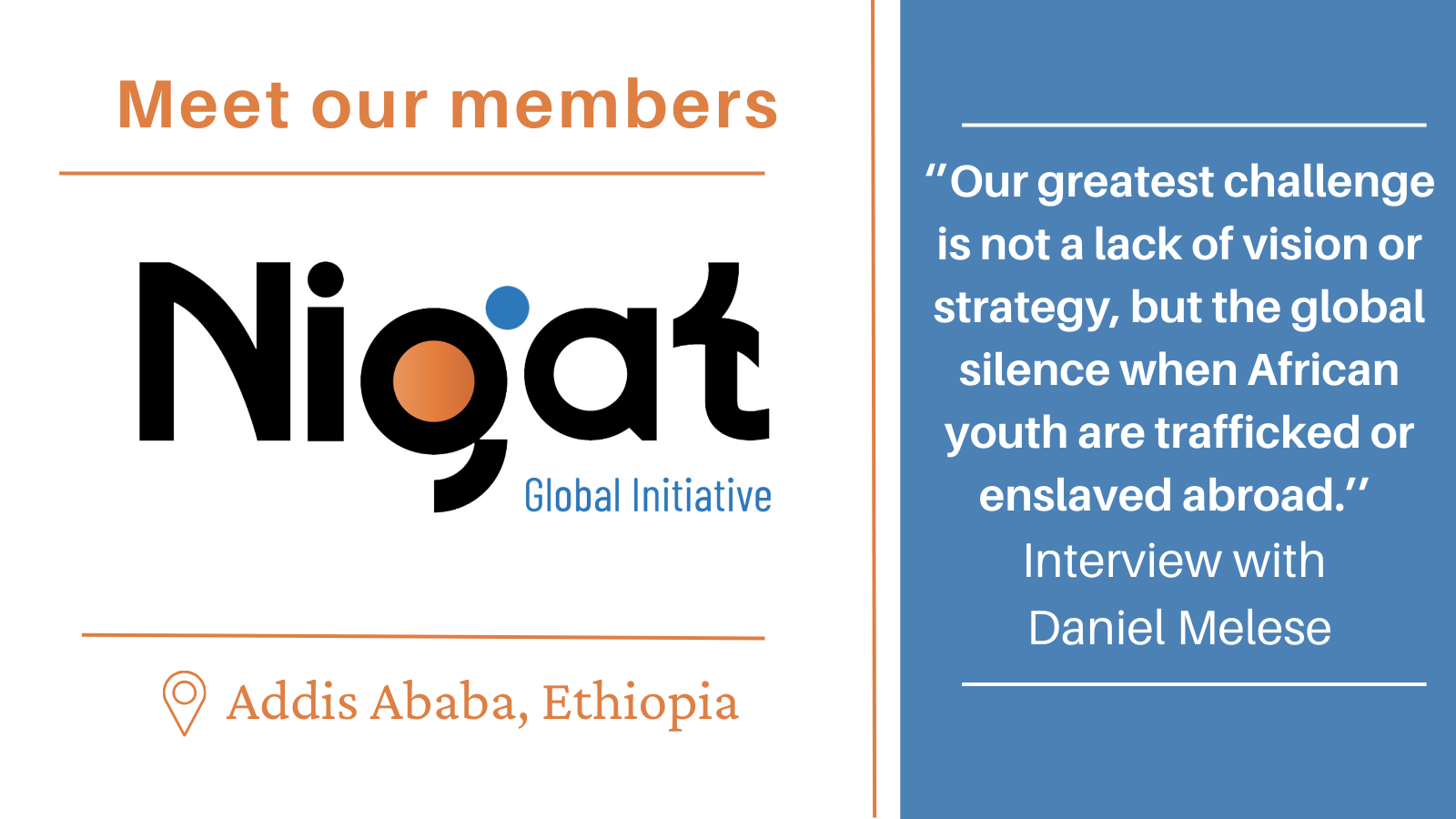
‘’Our greatest challenge is not a lack of vision or strategy, but the global silence when African youth are trafficked or enslaved abroad.’’
- Details
As part of GAATW’s efforts to highlight the work of our new members, Trinity Blacklock, intern from GAATW, interviewed Daniel Melese Areda, founder of Nigat Global Initiatives (NGI) in Ethiopia. In their conversation, he describes the organisation’s origins, its survivor-centred approach, and its commitment to systemic change in anti-trafficking work.