In November, Tanya Gribanova and Vivian Cartagena, from the Alliance Strengthening Programme at GAATW, had a conversation with Abida Pehlic from Novi Put, a Bosnia and Herzegovina-based anti-trafficking organisation, to explore its history and work supporting women and girls affected by trafficking and gender-based violence. Abida shared how Novi Put provides specialised psychosocial support through its counselling centre, conducts prevention and awareness-raising activities, and works to protect survivors from further exploitation and revictimisation. We also discussed the impact of funding cuts on the organisation’s work, challenges survivors face in accessing justice, including victim-blaming and forced criminality, and the importance of collaboration and solidarity through networks such as GAATW.
Tanya: Welcome, Abida! Thank you for joining us today in a conversation to understand more about Novi Put’s work and history. Could you please tell us how and why Novi Put was established?
Abida: Novi Put was established in 2010 by women who already had extensive experience in combating human trafficking and providing direct support to survivors of different forms of exploitation.
Novi Put is an award-winning organisation. In 2022, we received the Stop Slavery Hero Award from the Thomson Reuters Foundation. A year earlier, we received the Child10 Award and recognition from Her Majesty Queen Silvia of Sweden and her foundation, Care About the Children, for our work to prevent the trafficking and sexual exploitation of girls to and within Europe.
Today, we are one of the leading anti-trafficking organisations in Bosnia and Herzegovina. We used to run a specialised shelter for women and girls who had experienced trafficking, but unfortunately, we had to close it due to financial constraints. Today, there is not a single shelter in Bosnia and Herzegovina dedicated exclusively to victims of human trafficking. There are shelters that accommodate different groups of survivors, but ours was specifically for women and girls who had experienced trafficking.
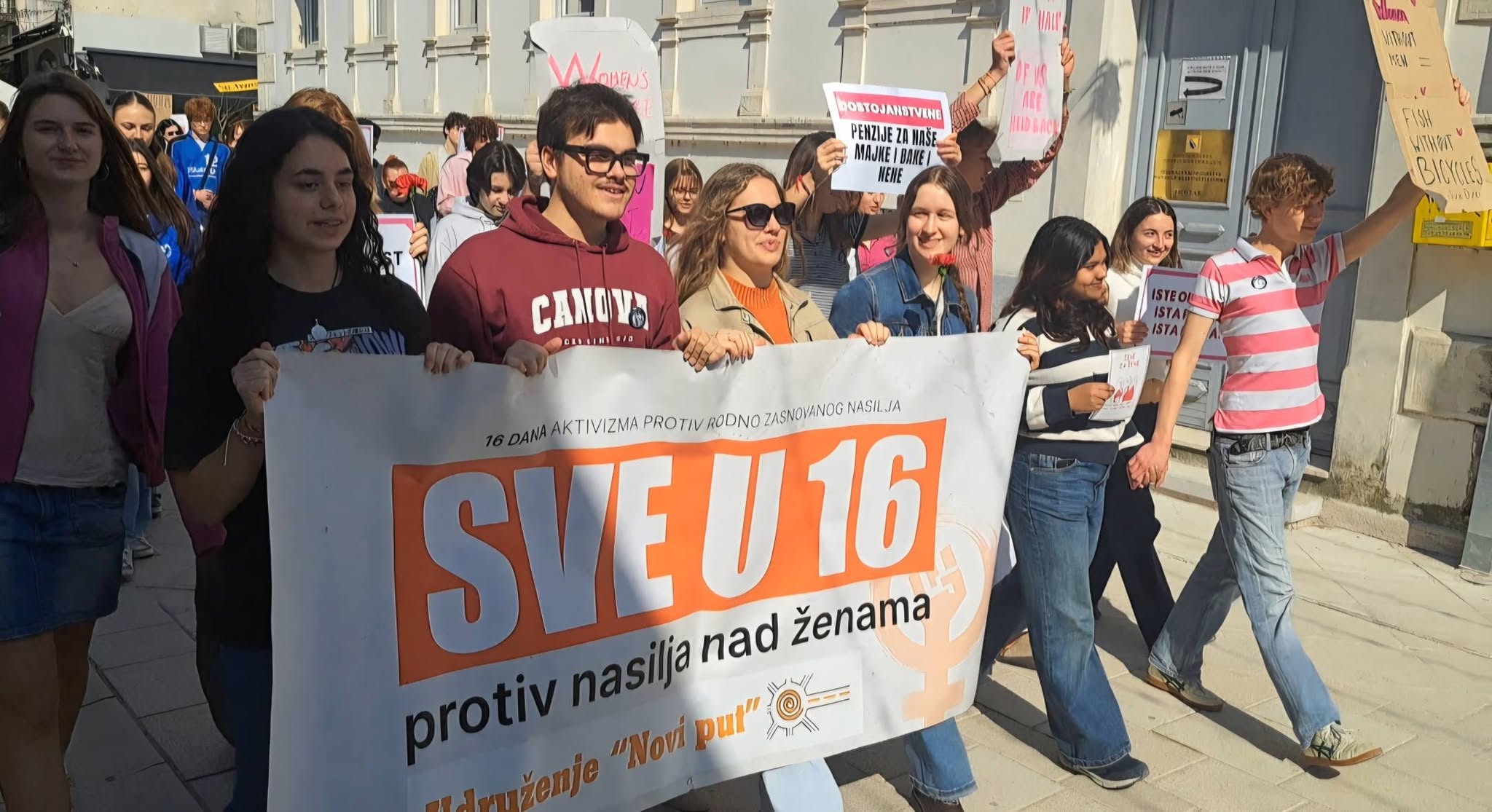
We currently run the largest free-of-charge counselling centre for victims and survivors of all forms of human trafficking, as well as gender-based violence, including online and technology-facilitated violence.
Novi Put is also a member of the Global Clearing Centre for the removal of non-consensual intimate images. This is particularly important because many survivors of sexual exploitation are blackmailed with intimate photos or videos and live in fear that these materials will be shared online. Through this membership, we can help remove these images without survivors having to report to the police. We can also create digital hashes to help prevent further sharing. For us, this is a major step forward in protecting survivors, especially in a society where women and girls are so often blamed for the violence and exploitation they experience.
We also work with children survivors of human trafficking and contemporary forms of slavery. We have two colleagues specifically dedicated to working with these children, and we have signed a Memorandum of Understanding with the Institute for Children without Parental Care, where many of them are accommodated. Our work focuses on empowering these children and preventing them from revictimisation once they leave the institution.
Tanya: You mentioned that Novi Put previously ran a specialised shelter for women and girls who had experienced trafficking. Could you please tell us how the experiences and needs of survivors shaped the support Novi Put provides today?
Abida: When we were running the shelter, we learned directly from victims and survivors what they really needed. And that was specialised support, especially psychosocial support. So, when we had to close the shelter because of a lack of funding, we continued providing these services through our counselling centre.
Currently, we have ten certified psychotherapists. We are also often approached by women and girls from neighbouring countries, particularly Croatia and Serbia, because we speak practically the same language. This year, we also launched online counselling because we were overwhelmed with requests from women and girls in other parts of Bosnia and Herzegovina, too far away for us to travel to. They were asking Novi Put to provide them with psychosocial support, so we decided to offer counselling online. It has been a great success, and we are receiving more and more requests for our services.
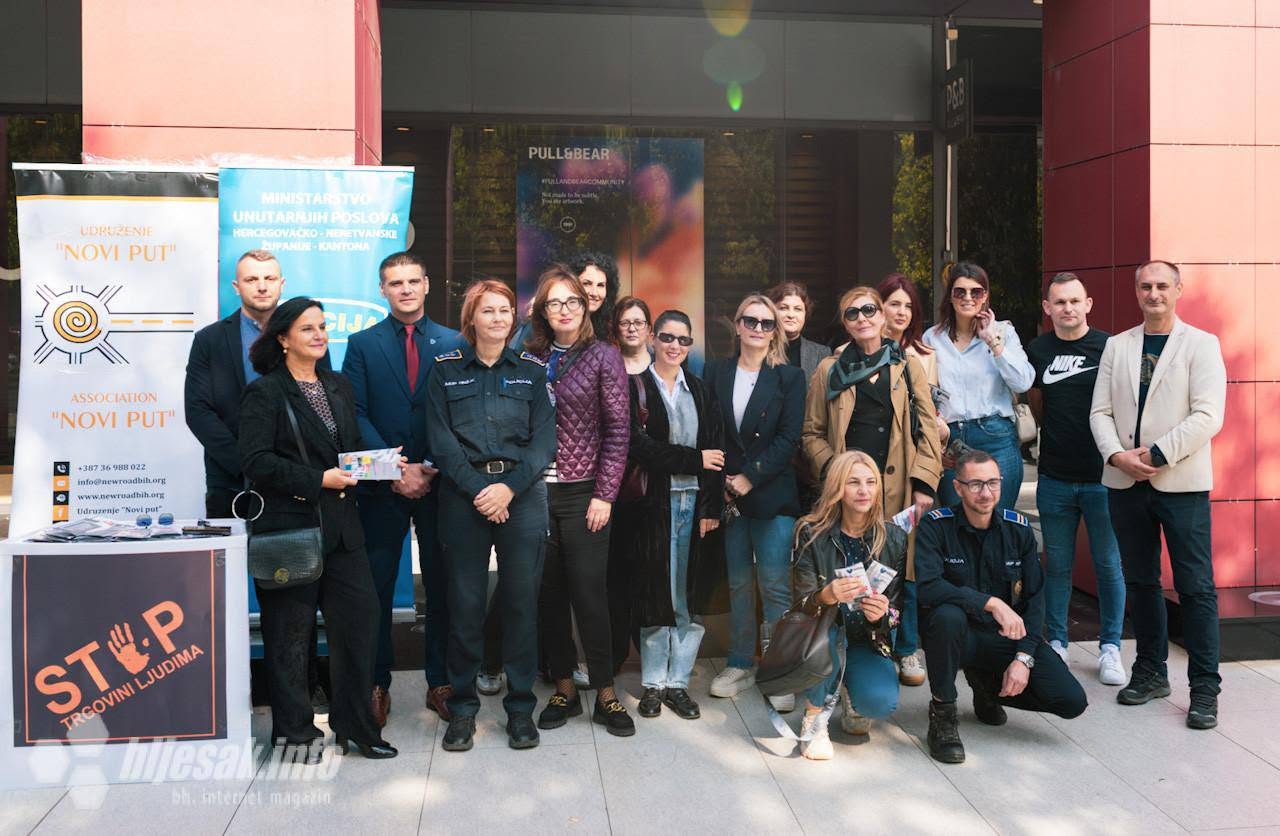
What survivors need is someone who will listen to them, someone who will tell them that it is not their fault that they became victims of sexual exploitation, that they are not worthless, that their lives matter and that they can continue with their lives. We also have a mobile team that reaches out to women and girls living in remote areas, mostly in the Herzegovina region, where they have little or no access to free specialised support.
When we have enough capacity, we help survivors find jobs or continue their education. For example, we supported one young woman who had dropped out of school. We helped her complete secondary school and then enroll at university. Today, she is married and has children, and we are very happy for her. And this was thanks to our staff who believed in her, who showed her empathy and helped her find her strength, her self-esteem and her sense of personal worth again.
''We want survivors to know they can count on us for as long as they need our support''
Vivi: Thank you, Abida! You've spoken about the importance of supporting survivors to rebuild their lives. But I am also curious about Novi Put's prevention work. What kind of prevention work does Novi Put carry out, and how has this been affected by funding cuts?
Abida: Actually, at Novi Put, we know how difficult it is to empower a survivor of any form of violence, especially sex trafficking. That is why prevention is so close to our hearts. It is really our primary mission. We would much rather prevent someone from becoming a victim through one or two awareness-raising sessions than spend six months, a year or even two years supporting them afterwards, without any guarantee that we will succeed.
Empowering survivors is very challenging. It depends on the severity and duration of the exploitation, as well as on the individual. Sometimes our psychotherapists work with the same survivor for six months or even a year. We don't apply a strict three-month rule because we want survivors to know they can count on us for as long as they need our support.
Since January 2025, we have hardly had any funding for prevention. This autumn we received a small grant to conduct awareness-raising activities in schools, the first one specifically dedicated to prevention in almost 2 years.
What really worries us at Novi Put is that there is so little understanding of the importance of prevention, whether among authorities or donors, especially in a country such as ours, which has been identified as a country of origin, but also transit and destination. Working with survivors has taught us about the importance of prevention and Novi Put has been trying to compensate for the lack of funding by working on a voluntary basis, but only within Mostar, where we can walk from one school to another.
''They just want someone to listen to them and help them move forward with their lives, without having to go through all of that.''
Tanya: You've mentioned the difficulties you're facing with funding. Could you please share how these challenges affected your ability to support survivors and continue your work?
Abida: Unfortunately, even though Novi Put is one of the most active anti-trafficking organisations in Bosnia and Herzegovina, we have been struggling with funding, especially since the cuts in January 2025. For almost two years now, we haven't received any substantial grants to support our anti-trafficking work. In fact, the only grant we have received during this period was a small grant which will expire soon. Thanks to this grant, we have been able to cover some of the basic costs of running our counselling centre.
Unfortunately, we don't receive any support from the institutions responsible for preventing human trafficking in our country. The situation in Bosnia and Herzegovina is very complicated. We are a post-conflict country, and people have never really had a chance to recover from the war in the first place. For years, we have been faced with political instability and threats of secession and another war. This has a serious impact on people's mental health and makes our work even more difficult. So one of our major concerns is our staff's self-care and resources to prevent burnout.
Our ten certified psychotherapists are all women with master's degrees in psychology, child counselling or social work. Only three of them receive small monthly fees, the other seven are volunteers, who are investing their time, expertise and empathy to help us to fill in these institutional gaps, but unfortunately they can stay with us only until the end of this year. While working with survivors of human trafficking, exploitation, violence, we work with some of the most difficult cases. Social welfare centres and other institutions are also understaffed and often don't have certified psychotherapists, so they refer their most difficult cases to us.
We are very grateful to all our colleagues, but at the same time we are worried about how to keep our remaining staff in these difficult time for non-profit grassroot NGOs working on prevention of the worst crimes against human beings and empowering survivors thereof.
Vivi: Thank you, Abida. It's really disheartening to hear about the challenges you and your team are facing. Throughout the year, we've heard from many of our members about programmes being shut down and staff having to be let go because of funding cuts. This affects not only the organisations themselves but also the people who really need their support. The need is still there, and trafficking is not stopping. Although you mentioned that Novi Put doesn't receive support from the public institutions responsible for preventing human trafficking, I understand that you work closely with some government institutions. Could you tell us a little more about these relationships and how you navigate the challenges?
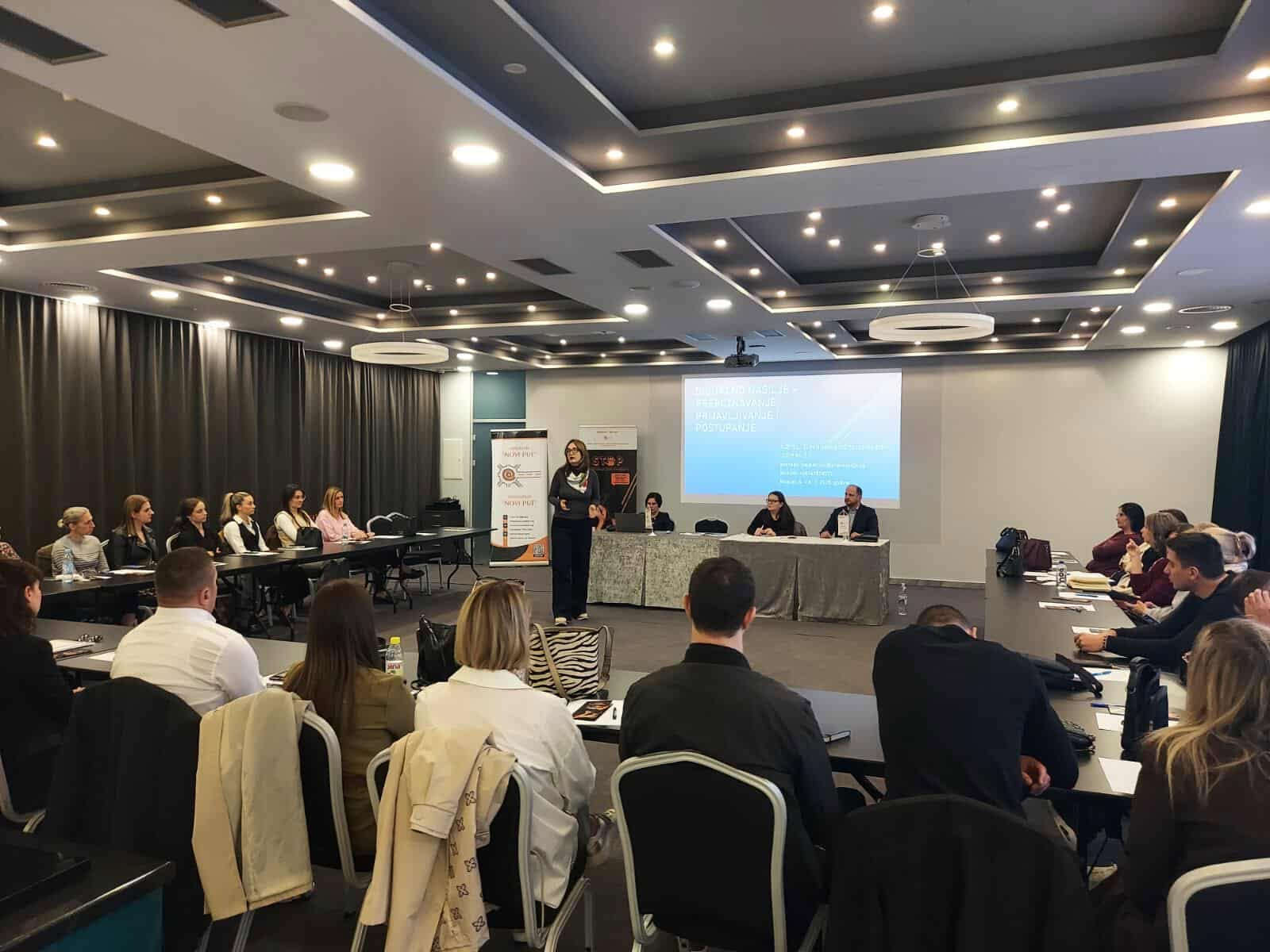
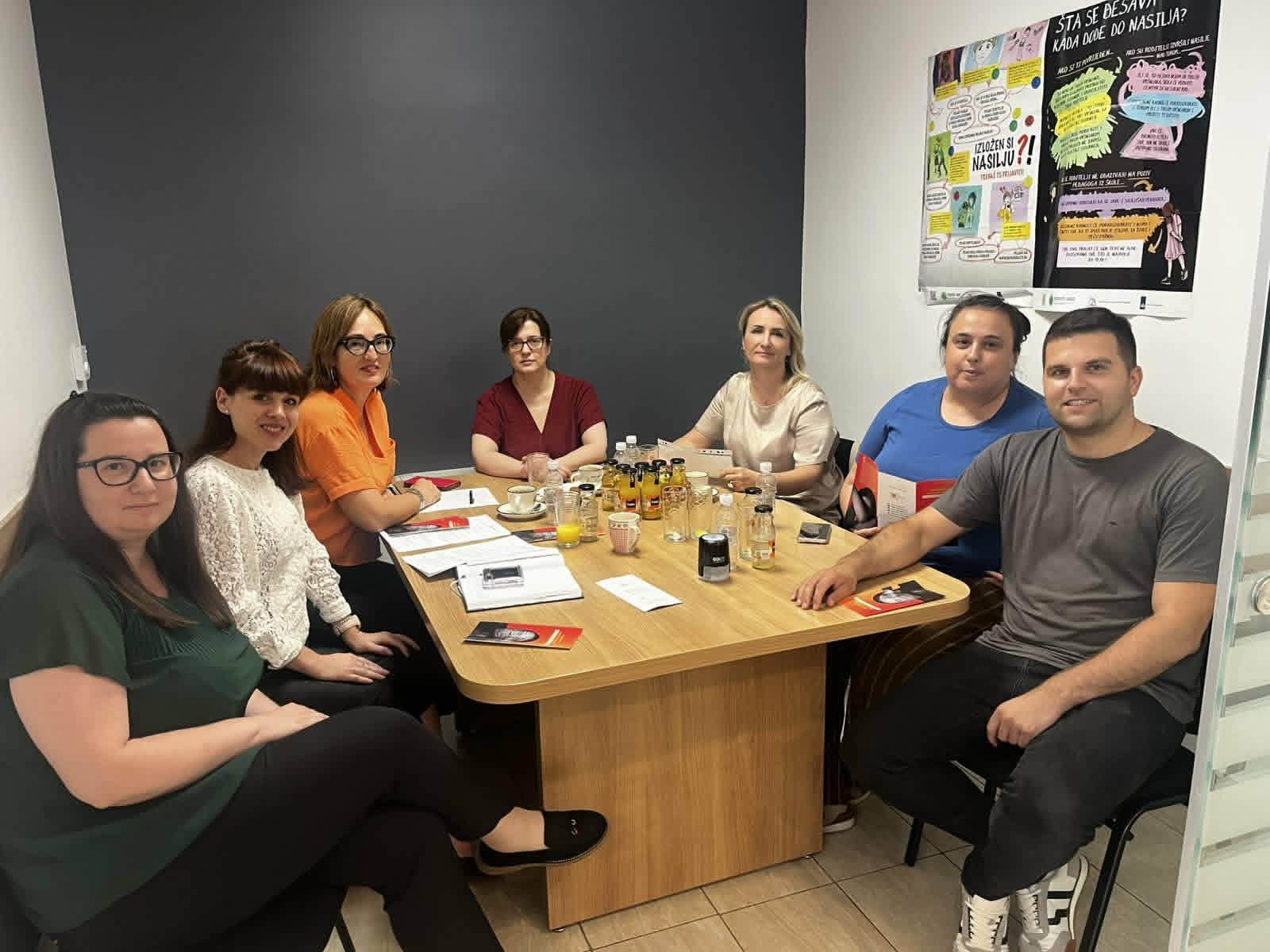
Abida: Actually, we work closely with many government institutions. We have signed MoUs with centres for social welfare, relevant ministries, public health institutes, and we have excellent cooperation with the coordination teams for preventing human trafficking, where we are also a partner organisation. We are also a partner organisation of the coordination teams for preventing gender-based violence.
We have been working for years to raise awareness among first responders, especially police officers. We also implement grassroot awareness raising activities, as our society is still very misogynistic and patriarchal, and many men, but also many women, tend to blame women for what happens to them.
For example, if a girl becomes a victim of trafficking for sexual exploitation, many people will blame her and her parents. They won't blame society or the system that has created a situation where women, and especially underage girls, are treated as commodities. Therefore, we work closely with all relevant institutions that can eventually prosecute perpetrators.
In 2025, following amendments to the Criminal Code introducing penalties for technology-facilitated gender-based violence, we immediately organised training for police officers, social welfare centres, judges and prosecutors to train them on how to apply the new legal provisions when investigating and prosecuting these crimes.
Tanya: You mentioned that victim-blaming remains a serious problem, including among some of the people responsible for protecting survivors. What other challenges do survivors face when trying to report their experiences of trafficking and seek justice?
Abida: This is a very big problem because many victims don't want to report their cases. Some of them have also been forced to commit illegal acts while being exploited, so they are afraid that they themselves will be punished.
We have assisted women who had been recruited for domestic work in Germany. They were promised well-paid jobs, but they ended up working without permits and were never paid. Their employers threatened to report them to the police. So, when they returned to Bosnia and Herzegovina, they were afraid to seek justice because they might be banned from entering the EU again, as they actually worked illegally in an EU country. And then they would also need a lawyer, which they couldn't afford.
For victims of sexual exploitation, it can be even more difficult. We had one client who was trafficked and sexually exploited in another city in Bosnia and Herzegovina. She decided to report her traffickers to the police and started receiving psychosocial support from Novi Put. But just two days later, some of her personal information appeared in the newspapers, which could easily make people identify her. She had to leave the country, and she possibly dropped the charges against her traffickers.
So, you can imagine why many survivors are afraid to report. They worry about their identities becoming public, about being blamed and shamed and about what the traffickers might do to them. And as an organisation that has worked with survivors for almost 2 decades and learned about their struggles in getting justice, we understand and don’t blame them. Eventually, they just want someone to listen to them and help them move forward with their lives, without having to go through all of that.
Tanya: Thank you, Abida, for sharing these experiences and highlighting the challenges survivors face when seeking justice. You mentioned that some survivors are forced to commit crimes while being exploited. Trafficking for forced criminality is also an issue GAATW has been looking into. Could you tell us more about the cases Novi Put has encountered and how you support those affected?
Abida: Yes, of course. We even have clients who were forced to commit petty crimes, including pickpocketing and other forms of theft. I think it has been 12 or 13 years since Novi Put first started warning our authorities about trafficking networks exploiting Roma children and forcing them to commit crimes abroad. These networks used to bring children, including young girls, to Mostar and train them in pickpocketing. Those who were most successful were then taken abroad to continue stealing.
There have been several investigations and prosecutions in France over the years, including another case in 2026 involving family members of a notorious trafficking gang investigated and prosecuted for organising pickpocketing and other forms of exploitation of women and children in different European countries.
In 2025, more than 30 children, many of whom were toddlers, were found in a house in Brčko, living in terrible conditions. They lacked basic necessities, including adequate food and care. The case came to light when a girl escaped from the house and approached a passer-by for help.
The children had been born in different countries, including Italy, Spain, Croatia and Bosnia and Herzegovina, and many were not related to each other.
What was particularly shocking was that, from what we understood, after an investigation the families faced only penalties for child neglect. We believed that the children were being used to control their mothers and force them to commit crimes across Europe for trafficking networks, but this was not reflected in how the cases were handled.
Tanya: Thank you for sharing these cases, Abida. They really show how complex the situations Novi Put deals with can be. And before we finish, I'd like to ask about Novi Put's membership with GAATW. You've been part of the Alliance for more than ten years. How has this experience been for your organisation, and what would you like to see from this collaboration in the future?
Abida: We are very happy to be part of this network because you have a very active membership. We receive a lot of emails with useful information, and you also organise valuable training opportunities.
I remember my first in-person GAATW meeting in Bangkok several years ago. I met so many people there, and we are still connected today. We follow each other on LinkedIn, learn from each other's good practices, and whenever we need information, clarification or support, we can reach out to one another.
For me, this is the greatest value of being part of the network: knowing that we have colleagues we can count on. There will always be at least one person who responds and says, "Hey, you could do this, or you could try that." That is really important.
Belonging to a network is so valuable for any NGO because you know that you are not alone in your fight. You know that there is someone behind you who can support you. We really appreciate being part of GAATW, and we hope we will be able to meet in person again soon.
Tanya: Thank you so much, Abida. It's really lovely to hear that being part of the Alliance has been meaningful for Novi Put, especially the connections you've built with other members over the years. We also hope we'll have the chance to meet in person again. Thank you again for taking the time to speak with us and for sharing your experiences so openly.