
In October, Vivian Cartagena, Programme Officer for Alliance Strengthening at GAATW, interviewed Prabir Biswas, Deputy Director and Coordinator of the Bangladeshi Ovibashi Mohila Sramik Association (BOMSA), to explore the organisation’s community-based work and its efforts to protect women migrant workers’ rights. Prabir shared how BOMSA supports women throughout the migration journey, from pre-departure information and assistance abroad to reintegration, while advocating for ethical recruitment and stronger government support. We also discussed challenges including exploitation, trafficking, and gaps in policy implementation, highlighting the importance of collaboration and collective advocacy to advance migrant workers’ rights.
Vivian: Welcome, Prabir! Could you tell us the story behind BOMSA’s founding? We understand it was established by a woman migrant worker who had returned home. What inspired her to start the organisation, and what were its initial goals?
Prabir: Thank you for this opportunity to share about BOMSA. BOMSA was founded in 1998, and before that, our Executive Director had been working for an electronics company in Malaysia, where she witnessed the difficulties and suffering faced by women migrant workers. When she returned to Bangladesh, she felt that she needed to do something to support them. She decided to establish an organisation that would always stand beside women migrant workers and uphold their rights. That was the main motivation behind the creation of BOMSA.
Later, in 2004, BOMSA obtained its NGO registration and registration with the Department of Women Affairs, which allowed us to expand our work with foreign funding. So, from the beginning, our main purpose has been to protect the rights of women migrant workers and their family members.
Vivian: When you talk about women migrant workers, are you referring to Bangladeshi women working abroad or migrant women in Bangladesh?
Prabir: We work with three groups: women who are planning to go abroad for work, those who are already working abroad, and returning migrant women, as well as their family members.
Vivian: Ok, I understand ! Would you tell us more about BOMSA's programmes? What is the kind of support that you provide to women migrant workers and their families?
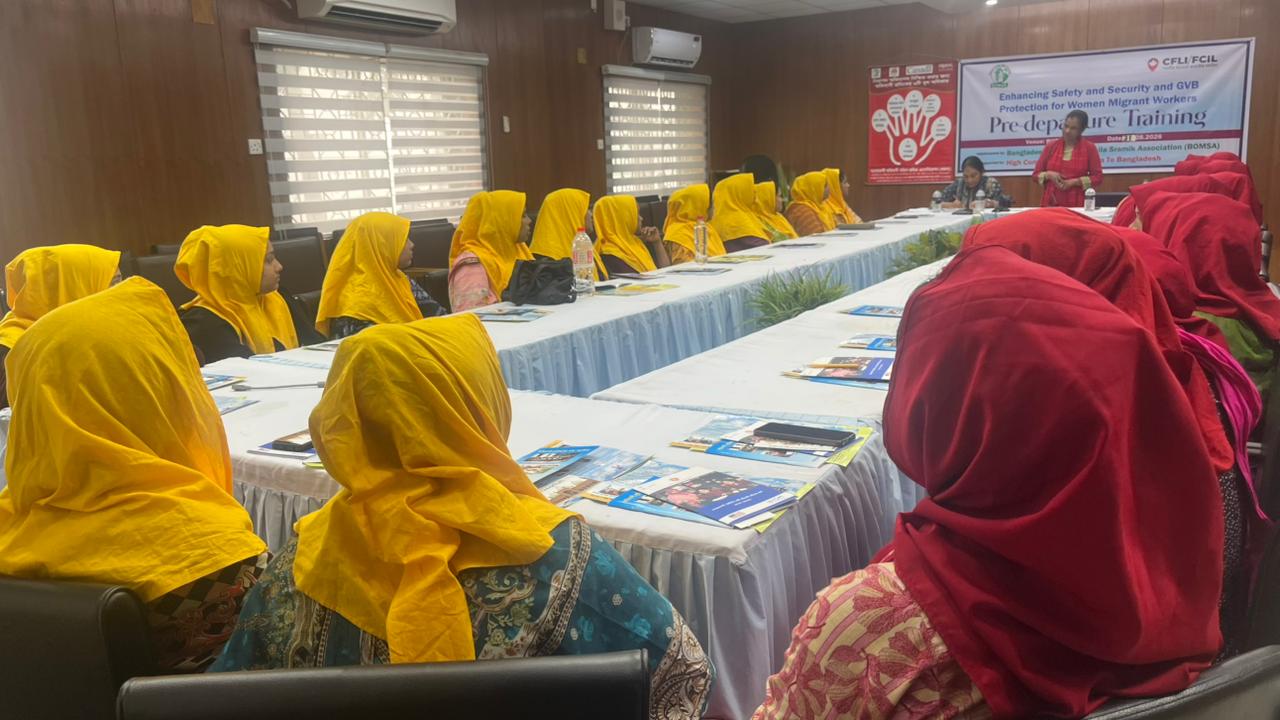
Prabir: Thank you, this is a very good question! You know, many of the women migrating abroad from Bangladesh have had limited access to formal education. Some have only studied up to grades 2, 3 or 5, while others have completed grade 10. That is why we focus on providing them with information about the migration process and how to migrate safely. We start by providing awareness sessions at the pre-decision stage, before women decide to migrate. Later, as they prepare to leave Bangladesh, the government provides pre-departure training, and we also conduct sessions as part of this training.
When women are working abroad in their employers' homes, we stay in contact with them and provide support whenever they need our help. So, after they return to Bangladesh, we support them with income-generating activities and provide guidance on managing their remittances. We also connect them with organisations that provide financial support and sometimes offer business management training so they can start their own businesses.
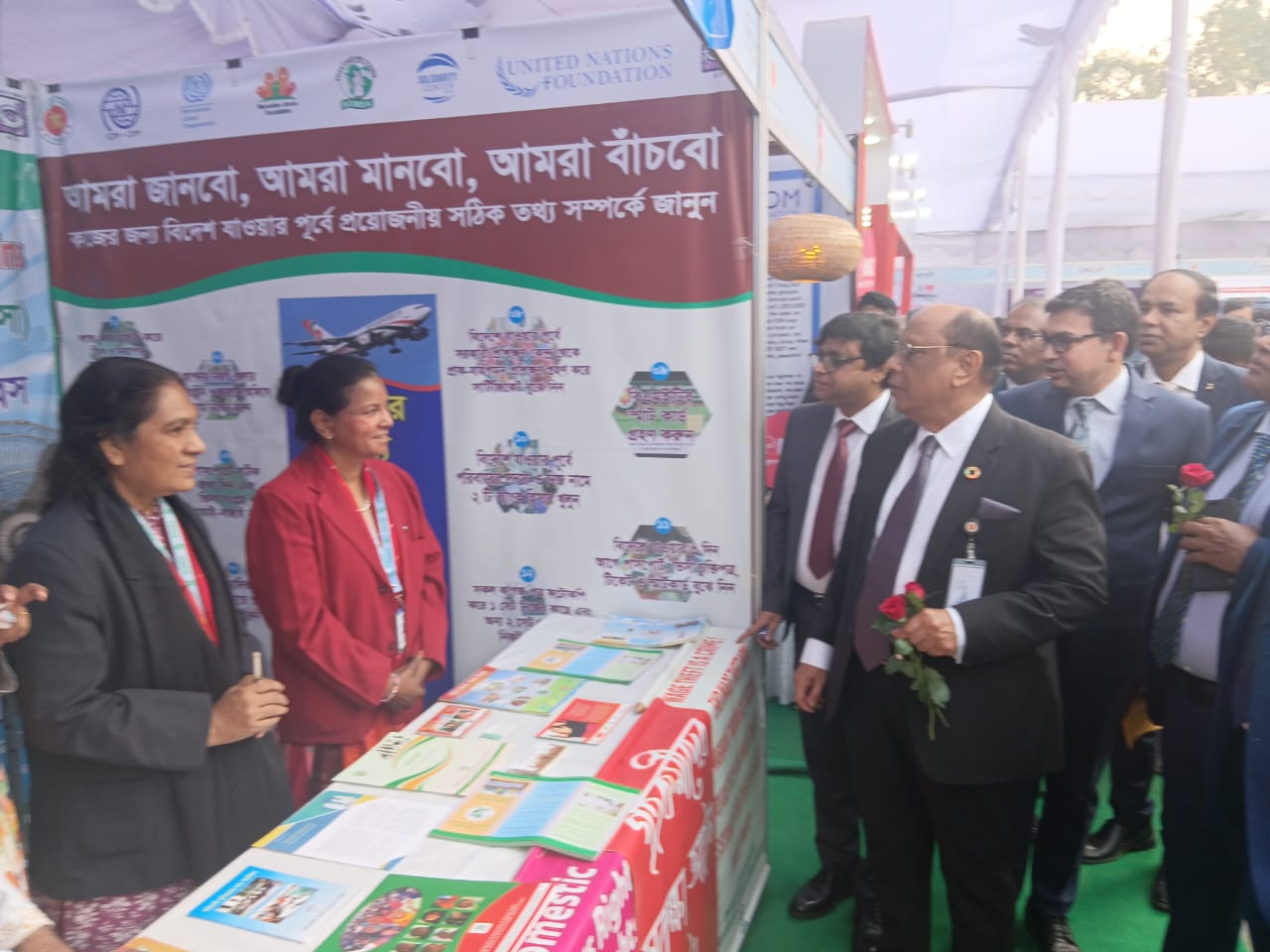
Apart from this, we have several advocacy programmes with the government. For example, we advocate for standard employment contracts and for health issues to be included in the pre-departure training manual. You know, the recruitment process in Bangladesh still has many problems, so we are working with the government and other stakeholders in the migration sector to promote a more ethical recruitment process. This is an ongoing part of our advocacy work.
Vivian: Thank you, Prabir! That's very interesting, particularly what you mentioned about fair recruitment and government support. I would also like to know more about the sectors in which Bangladeshi women work abroad. We know that the garment sector is very large in Bangladesh and that workers face many challenges, including labour exploitation. But what kind of jobs are women typically recruited for overseas?
Prabir: Most women migrant workers from Bangladesh go abroad to work in the domestic work sector. Some also go into the ready-made garment (RMG) sector, as you mentioned, particularly in countries like Jordan and Lebanon. In the Gulf countries, including Saudi Arabia, the UAE, Qatar and Oman, most Bangladeshi women work as domestic workers.
Vivian: Right, that’s quite similar to other countries, like India or Nepal.
Prabir: Yes, it’s the same in India, Nepal, Sri Lanka and Indonesia.
Vivian: Exactly. And in the current context of migration, what are the biggest challenges you are facing? We know that migration policies are becoming increasingly restrictive and that the rights of domestic workers are not always guaranteed, especially under the kafala system in Gulf countries. What are the main challenges you face in supporting women migrant workers?
Prabir: Actually, the challenges start in Bangladesh, from the moment a woman decides to migrate. For example, when a woman decides to go to Saudi Arabia for domestic work, she already starts facing problems. Our government has declared that women going abroad as domestic workers do not need to pay any recruitment fees. However, middlemen still collect money from them, for example, to arrange their passports or complete their medical examinations.
The middlemen also make promises about working conditions. They tell women that they will only need to work eight hours a day, that they will stay in their employer's house and that they will be able to go outside. But when women arrive at their employers' houses, they find that the reality is very different from what they were promised.
There is also the language barrier. Women migrant workers face many difficulties in destination countries, including physical violence, torture and wage theft. When they contact us and tell us about the problems they are experiencing, we try to communicate with them over the phone or get in touch with their families.
After listening to their problems, we try to address them with the help of our government or the recruitment agency responsible for sending them abroad. We file complaints with the Bureau of Manpower, Employment and Training (BMET). We then work with them and the recruitment agencies to try to solve these problems. So these are the kind of challenges that women migrant workers face.
Vivian: It’s very interesting to hear how you work with different stakeholders involved in the recruitment and migration process to support women migrant workers. But how does this support extend to their families?
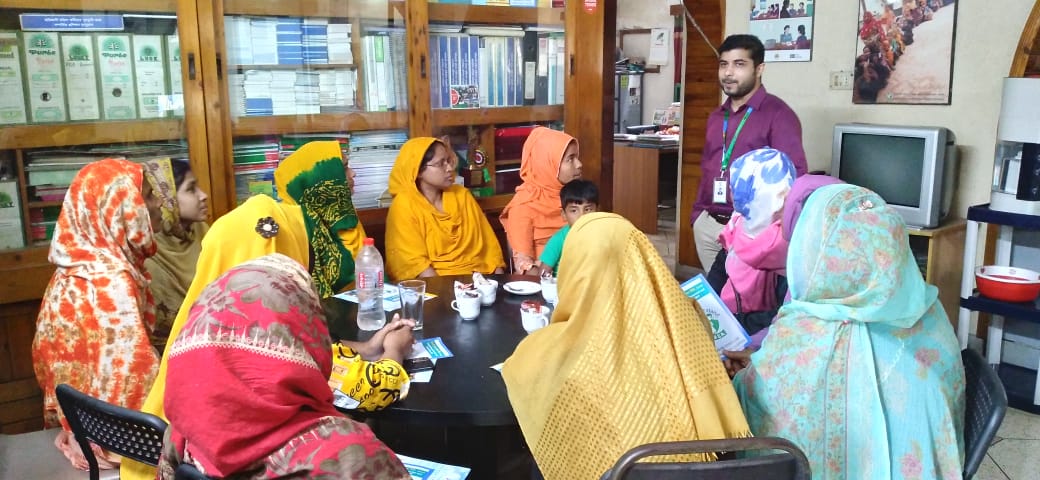
Prabir: As I mentioned earlier, we are involved in the pre-departure training provided by the government, where we share important information and advice with women before they migrate. For example, we advise them to open two bank accounts and make three copies of all their documents: one to take with them, one to leave with their family, and another with a close relative. That way, if a woman faces problems in a destination country and contacts us for help, we can also communicate with her family. Her family members already have the necessary information and documents, so they can contact us as well. We invite them to our head office to discuss the situation and see how we can provide support.
We also provide family members with training and awareness sessions and involve them in meetings with the government and civil society organisations. This helps them better understand migration laws, the current migration situation in Bangladesh, and what they can do to support their relatives.
Apart from this, we connect family members with financial institutions where they can access loans and start their own businesses.
Vivian: That’s very interesting! Have you also come across cases of human trafficking in your work?
Prabir: Yes, definitely, we receive many cases ! You know, irregular migration and trafficking are two different things. But now, in Bangladesh, we are seeing cases where women migrate through regular channels, with valid visas and flight tickets, but are trafficked after arriving in the destination country. This makes it difficult to identify cases of trafficking. That is one of the main challenges we face in Bangladesh.
Vivian: And how does BOMSA respond to these cases? Do you collaborate with other organisations?
Prabir: Yes, I would like to mention that although we work with migrant workers, we do not have a legal support unit within our organisation. That is why we collaborate with other organisations that provide legal assistance. When we receive cases where legal support is needed, we refer them to organisations such as Ain o Salish Kendra (ASK), Bangladesh Legal Aid and Services Trust (BLAST), and Bangladesh National Woman Lawyers' Association (BNWLA).
We also receive many cases involving migrant workers who need assistance abroad. But also, because we work from Bangladesh, we cannot directly provide support in destination countries. That is why we rely on international organisations such as the ILO and IOM, as well as networks like GAATW, Migrant Forum in Asia (MFA) and CARAM Asia.
For example, when we receive cases involving Bangladeshi migrant workers in Malaysia, we contact CARAM Asia, which helps us provide assistance to them. MFA also supports us in countries such as Jordan, Saudi Arabia, Qatar and Lebanon. So these partnerships are very important for us because they allow us to help migrant workers even when they are abroad.
Vivian: You mentioned that some women migrate through regular channels but are trafficked after arriving in destination countries. Could you tell us more about what kind of situations they face?
Prabir: Yes. For example, in many cases, the middlemen make promises about the working conditions, i.e. they tell women that they will only need to work eight hours a day, but when they arrive, they end up working more than 16 hours. Sometimes, women are recruited for domestic work but find themselves working in garment factories or other sectors instead.
There are also cases where employers lock women in bathrooms, do not provide them with proper food, or withhold their salaries. These are some of the forms of exploitation that women migrant workers experience.
Vivian: I would also like to know more about the reintegration of returnee migrant workers. We know that women often face challenges when they return to their communities, including stigma, economic difficulties and a lack of support from the government. What is the situation in Bangladesh, and what has BOMSA been doing to support reintegration?
Prabir: This is a very big issue in Bangladesh right now. Until recently, we did not have a reintegration policy. Civil society organisations working in the migration sector came together to advocate for better support for returning migrant workers, putting pressure on the government to develop such a policy.
The government has now adopted a reintegration policy, but it has not yet been properly implemented. This is a broader problem in Bangladesh. We have good policies, but we struggle with their implementation. The government is now taking some steps to support migrant workers, but the situation remains difficult. Every year, around one million people leave Bangladesh to work abroad, yet we are still not able to ensure good conditions for them.
Vivian: I would also like to ask about funding, which has been one of the biggest challenges for many of our members since last year. Has BOMSA been affected by funding cuts, or have you been able to continue your programmes without major changes?
Prabir: Yes, we were affected when USAID stopped its work in Bangladesh. But because our organisation focuses on women migrant workers, their rights and reintegration, we continue working on the same issues regardless of the donor. When we worked with USAID, we focused on safe migration, and we continue doing the same work with other donors. That is why we have not faced too many problems.
However, the main difference is the scale of our work. When we receive larger grants, we can work in three or four districts in Bangladesh. With smaller grants, we might only work in one district. So the activities remain the same, but the number of districts we can reach depends on the funding available.
Vivian: And how many districts are you currently working in?
Prabir: Currently, we are working in three districts.
Vivian: Alright! And regarding BOMSA's membership in GAATW, how has this experience been for your organisation, and what would you like to see from this collaboration in the future?
Prabir: It has been a very good experience, and I would like to give special thanks to Bandana-didi, and the other GAATW colleagues who have visited Bangladesh. We have also received valuable training through GAATW, together with Ovibashi Karmi Unnayan Program (OKUP) in Bangladesh. I want to thank GAATW for these opportunities, and we hope to continue this collaboration in the future.
Also, BOMSA's work is closely related to the focus of the Migration Thematic Group. We collect cases from across the 64 districts of Bangladesh, and we can share our experiences with GAATW, including how we manage cases, provide assistance to migrant workers and resolve their problems. We also carry out advocacy with the government on issues such as trafficking, safe migration and health. These are all areas where we can share information and experiences with GAATW and work together more closely.
Vivian: Amazing, thank you! I have two more questions. Within the Migration Thematic Group, we are also looking at migrant care workers. I would like to know whether Bangladeshi women are also migrating for care work, such as looking after children or older people. Is this something you are seeing in your work?
Prabir: Yes, I think some women from Bangladesh are starting to migrate for care work, but the numbers are still very small. The majority of women migrant workers go abroad for domestic work, followed by the RMG sector. Most of the problems we hear about from women in destination countries involve domestic workers. Women in the garment sector also face difficulties, but we receive fewer cases from them.
Vivian: Right, and from our research and conversations with other organisations, we have seen that care work and domestic work sometimes overlap. For example, women may be recruited for domestic work, such as cleaning, but also end up caring for children or older people in the same household. This additional work is not always recognised and can lead to longer working hours. I think this is something we could explore further together, to understand whether Bangladeshi women are facing similar situations in Saudi Arabia or other destination countries.
Prabir: In this case, I would like to mention one issue. Why do so many Bangladeshi women choose to migrate as domestic workers rather than work in other sectors? For example, a woman might go to Jordan to work in the garment sector. After two or three years in Jordan, she returns to Bangladesh and decides to migrate again, either to Jordan or another country. But this time, she chooses domestic work because she does not have to pay any money. This is one of the main reasons why so many women choose this sector rather than nursing, caregiving or garment work. That is why we are advocating for our government to negotiate with employers in destination countries so that they cover recruitment costs in other sectors as well, including garment work, caregiving and nursing. If this were possible, more women could choose to migrate for different types of work, rather than only domestic work.
Vivian: When you say women do not have to pay anything, do you mean recruitment fees?
Prabir: Yes, exactly. If a woman wants to go abroad as a domestic worker, she does not need to pay any recruitment fees. But if she chooses nursing or caregiving, she might have to pay one or two lakh (BDT 100,000–200,000). That is why so many women choose to migrate as domestic workers.
Vivian: Yes, recruitment fees are often very high.
Prabir: Yes, and if we compare Bangladesh with India, Nepal, Sri Lanka, Indonesia or other countries, our recruitment fees are much higher.
Vivian: I understand. Also, I have another question and it is about trafficking for forced criminality in the region. One of the most prominent examples is trafficking into scam centres, particularly here in Southeast Asia. Have you encountered any similar cases involving Bangladeshi migrant workers?
Prabir: No, we do not have any recent experience with these cases.
Vivian: I see. We have come across cases involving Indian and other South Asian nationals, as well as people from East Africa, but so far we have found less information about cases involving Bangladeshi nationals. That is why I was interested to know whether BOMSA had encountered similar cases. Before we finish, is there anything else about BOMSA's work that you would like to share with our members? Do you have any future plans you would like to mention?
Prabir: I just want to highlight that we would like to continue working with GAATW because it is a very important network for us. We have received a lot of support, including training, knowledge-sharing and information about issues happening around the world. We have learned a lot through this collaboration and hope to continue working together in the future. Thank you from our side.
Vivian: Thank you so much, Prabir, for sharing your experiences and telling us more about BOMSA's work. It has been a pleasure speaking with you!